
Prostate Artery Embolization (PAE) Procedure: An Alternative for Men with an Enlarged Prostate Available at Jackson Memorial Hospital
An Alternative for Men with an Enlarged Prostate Available at Jackson Memorial Hospital
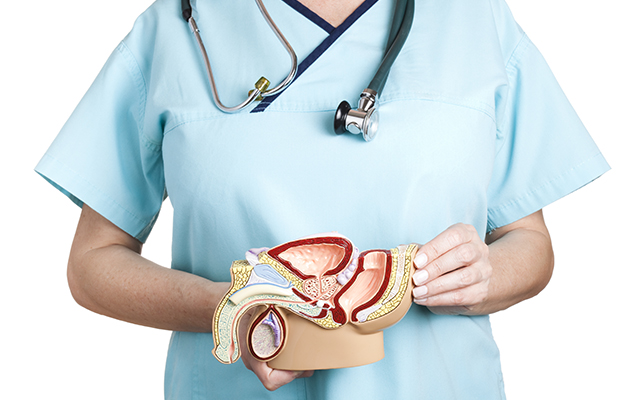
Prostate enlargement is common in men as they get older but as the gland grows, it can press on the urethra and cause bladder and urination problems.
Prostate artery embolization (PAE) is a non-surgical alternative for men that helps improve urinary symptoms caused by an enlarged prostate or benign prostatic hyperplasia (BPH) – the most common noncancerous prostate problem.
If BPH is left untreated, it can lead to future health risks, such as the inability to urinate, urinary tract infections, bladder, kidney, or urethra damage, bladder stones, and incontinence.
The likelihood of developing an enlarged prostate increases with age, particularly for men over 80. However, recent studies show that men should start getting checked in their 40s, especially with family history.
Issam Kably, MD, a UHealth – University of Miami Health System interventional radiologist at Jackson Memorial Hospital is currently researching in-depth prostatic hemorrhage in patients as the underlying cause of hematuria, blood in the urine. When the prostate enlarges, it blocks the urine flow because it is compressing the urethra. This is an obvious sign of BPH; however, many men are unaware of it.
Dr. Kably received intensive training in Brazil with Francisco Cesar Carnevale, MD, – a pioneer in the field of PAE. During the training at the University of Sao Paulo, he performed four prostate embolizations a day, learning the technique to safely conduct a PAE for patients with BPH.
The advantages to PAE is that it does not have the side effects of surgery such as blood in the urine, sexual dysfunction<, inability to hold your urine (incontinence), or scarring. The technique being used helps patients who previously had no luck with surgery, as well as in cancer or inoperable patients.
Dr. Kably has been successfully performing this outpatient procedure since December 2013 at Jackson Memorial Hospital, which is among the first hospitals to offer this procedure nationwide.
“Some of the most common symptoms of an enlarged prostate include frequent urination at night, the urgent need to urinate, a feeling that the bladder is not completely empty after using the restroom, pain when urinating, a sudden rush to run to the bathroom and blood in the urine,” said Dr. Kably.
During evaluation, a MRI or ultrasound of the prostate may be required to evaluate the rate of urine flow as well as a blood test to see the severity of the symptoms.
If the patient decides to undergo the PAE procedure with an interventional radiologist, a small and thin catheter is placed through an artery in the right groin into other arteries which are feeding the prostate.
Tiny particles are injected through the catheter into the prostate arteries to decrease blood supply to the prostate, thus reducing its size and symptoms.
Patients are given sedation if they choose to for the procedure and there is no need for general anesthesia. The procedure is not considered painful and in most cases, patients are discharged from the hospital three hours after the procedure; however, it may be necessary to stay overnight.
The patient will be discharged home without a Foley catheter, with a prescription for medication to alleviate potential mild symptoms but can return to normal activity within a week.
Overall, patients have seen a ninety percent improvement with maximum effect of PAE after three months.
Issam Kably, MD, is a UHealth assistant professor of clinical radiology and a vascular and interventional radiologist at Jackson Memorial Hospital.
