
At 39, a Mother of Five Faced an Unexpected Colorectal Cancer Diagnosis



By Carla Palmer
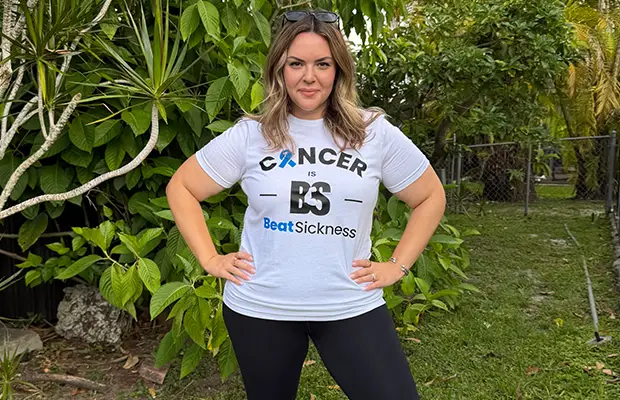
Between raising five children, keeping up with competitive sports schedules, and managing everyday responsibilities, Hanna Bustos is used to staying busy.
But when the 39-year-old began experiencing extreme fatigue, unexplained weight fluctuations, and changes in her bowel movements, she knew something wasn’t right.
“I would have very energetic days where I have a lot of meetings with clients and this and that, and then I’ll have a day where I can’t even get out of bed,” Bustos said.
Her symptoms began in late 2024 and continued throughout 2025. She experienced anemia that didn’t seem to improve with iron infusions, hair loss, and blood in her stool. At first, she wondered whether the bleeding could be caused by hemorrhoids.
But by January 2026, she noticed another concerning change in her bowel movements and decided it was time to look for answers.
Her primary care doctor referred her to a gastroenterologist, who recommended an endoscopy and colonoscopy.
Although routine colorectal cancer screening generally begins at age 45 for adults at average risk, Bustos was only 39.
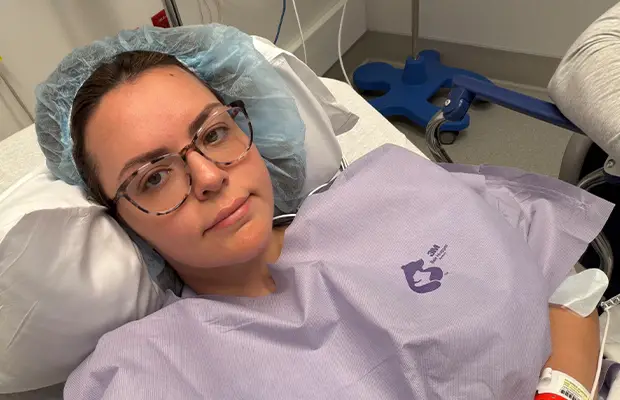
Within about a week, she underwent a colonoscopy that revealed three polyps. One tested positive for adenocarcinoma, a type of cancer.
“I didn’t want to settle on, ‘Oh my God, I have cancer.’ Oh my God, no, I need to do this. What’s the next step?” she said.
Before leaving the doctor’s office, Bustos asked for recommendations and scheduled an appointment with Gustavo Rubio, MD, a colorectal surgeon with Jackson Medical Group.
This wasn’t her first experience with Jackson.
Three years earlier, Bustos had delivered her twin daughters at Jackson Memorial Hospital after three previous pregnancies.
“I loved that experience,” Bustos said. “I loved working with my team”
Now, she was returning to Jackson under very different circumstances. This time, to meet with Dr. Rubio and talk about their game plan.
“The way he approached everything, it was very like, ‘We’re going to take this one step at a time,” she recalled.
On June 3, 2026, Dr. Rubio performed surgery at Jackson West Medical Center to remove the affected portion of her rectum.
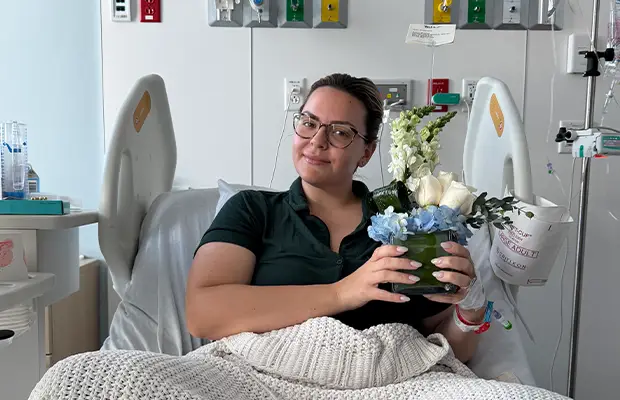
“The staff was incredible,” she said. “I felt like they were just very on top of everything in my care.”
But less than two weeks after surgery, she received an unexpected phone call from Dr. Rubio.
Although doctors had hoped surgery would be sufficient, pathology revealed that three of the 22 lymph nodes removed during the procedure contained cancer cells. Her diagnosis had changed from stage 1 to stage 3 rectal cancer. The news meant another difficult step in her journey: chemotherapy.
Bustos’s treatment continued with José Suarez, MD, a gastrointestinal medical oncologist with Sylvester Comprehensive Cancer Center, part of UHealth – University of Miami Health System, who oversaw her chemotherapy.
According to Dr. Suarez, chemotherapy plays an important role in treating stage 3 colorectal cancer by reducing the risk of recurrence.
For Bustos, treatment involved four rounds of chemotherapy over approximately three months.
Before beginning, she took a family vacation, knowing that the months ahead would be challenging.
And it was; she experienced side effects, such as severe sensitivity to cold, painful tingling sensations, muscle cramps, and involuntary movements.
Her medical team adjusted her chemotherapy dosage to help manage the side effects, allowing her to complete the remaining treatments.
Dr. Suarez remembers Bustos’s determination.
“She was very brave to go through the process,” he said. “She always showed a good attitude.”
Bustos also credits the Sylvester team for helping her through the experience.
“They’ve been carrying me throughout this whole process,” she said of Dr. Suarez and his nurse practitioner, Johanna Maseda.
After approximately three months of chemotherapy, Bustos rang the bell at Sylvester, marking the completion of her treatment.
Her most recent CT scans, blood work, and tumor markers have shown no evidence of disease, according to Dr. Suarez. While Bustos will continue to have regular follow-up appointments over the next several years, her medical team is encouraged by her progress and optimistic about her recovery.
For Dr. Rubio, Bustos’s story is also an important reminder that colorectal cancer can affect adults well before the recommended screening age of 45.
“The biggest warning sign is always rectal bleeding,” he said. “If bleeding is already a red flag, persistent bleeding is like a triple red flag.”
Other warning signs can include persistent changes in bowel habits, unexplained anemia, and fatigue. Anyone experiencing these symptoms should speak with a doctor, regardless of age.
“Early diagnosis is still key,” Dr. Rubio emphasized.
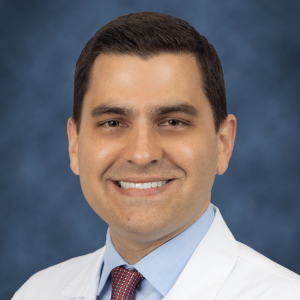
Gustavo Rubio, MD
Colon & Rectal Surgery, General Surgery
Jackson Medical Group
Colorectal And Minimally Invasive Surgery Specialists
9195 Sunset Drive Suite 230, Miami, Florida 33173
Jackson Medical Group – Jackson West
2801 N.W. 79th Ave. Suite 402, Doral, Florida 33122