
Breast Cancer Awareness Month: Know Your Breasts and Know When to Get Checked
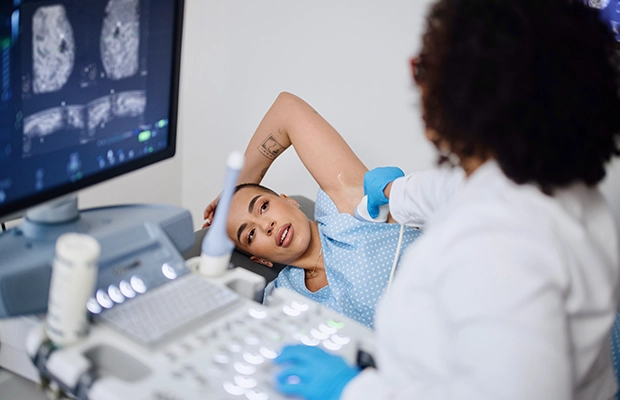
- Breast self awareness means knowing how your breasts normally look and feel, then reporting new or unusual changes to a health care professional.
- Breast changes that warrant evaluation include a new lump, nipple changes, unusual discharge, skin changes, swelling, or persistent breast pain.
- Women at average risk should receive screening mammograms every two years from ages 40 through 74, while higher risk women may need different screening plans.
Breast Cancer Awareness Month is a good time to focus on something that matters all year: knowing your breasts and understanding when to seek care.
Even though breast cancer can cause changes in the breast, early stages often don’t show symptoms. That’s why knowing what’s normal for you, paying attention to changes, and keeping up with recommended mammograms are all important parts of breast health.
Know how your breasts normally look and feel
You may have heard that women should perform a breast self-exam every month. Today, experts focus more on breast self awareness.
Breast self awareness means knowing the usual look and feel of your breasts so you can notice changes. Routine self-exams haven’t been shown to reduce deaths from breast cancer, and they aren’t a substitute for mammograms.
To perform a self-check, start by looking at your breasts in a mirror with your arms at your sides, with your hands on your hips, and with your arms raised. Look for changes in size, shape, symmetry, or the appearance of the skin or nipples.
Next, use the pads of your three middle fingers to gently feel the breast tissue. Use light, medium, and firmer pressure to feel tissue at different depths. Follow a consistent pattern so you cover the entire breast, including the area near your collarbone and under your arm.
If you have periods, breast tissue can change during your menstrual cycle. The week after your period ends can be a more comfortable time to check your breasts because swelling and tenderness may decrease.
Remember, the goal isn’t to diagnose breast cancer yourself. It’s to become familiar with your breasts so you can recognize a new or unusual change and report it to a healthcare professional.
Know the changes to watch for
Most breast changes aren’t cancer, but a new or unusual change should be checked by a doctor.
Changes to look out for include:
- A new lump in the breast or under the arm.
- A change in the size or shape of the breast.
- Fluid or discharge from the nipple that isn’t breast milk.
- Changes in the skin including redness, darkening, swelling, scaling, dimpling, or puckering.
- A rash, itching, or other changes around the nipple or areola.
- Breast swelling, even when you don’t feel a lump.
Breast pain isn’t usually a sign of breast cancer. However, persistent pain should still be discussed with a healthcare professional.
Don’t wait for your next mammogram if you notice a new change. A recent normal mammogram doesn’t mean a new symptom should be ignored. Your doctor may recommend additional testing, such as a diagnostic mammogram or ultrasound, depending on the change.
When should you get a mammogram?
For women at average risk, the U.S. Preventive Services Task Force recommends a screening mammogram every two years starting at age 40 through 74. This recommendation applies to women at average risk who don’t have symptoms or a history that places them in a high-risk group.
Some women may need a different screening plan based on their personal or family health history. If you’re younger than 40, 75 or older, or have factors that may increase your risk of breast cancer, talk with your doctor about how often you should be screened.
When should you visit a breast center?
A breast center can help evaluate breast concerns and provide breast imaging and other services when needed.
If you have a new lump or other breast change, an abnormal mammogram, or a concern that needs additional evaluation, talk to your doctor to see if you should schedule a visit.
The Taylor Breast Health Center at Jackson Memorial Hospital provides breast imaging and evaluation, including screening mammograms, diagnostic mammograms, breast ultrasounds, biopsies, and breast MRIs. The center also provides clinical consultation for the diagnosis and treatment of breast diseases.
If you notice a change in your breast, you don’t have to figure out what it means on your own. Your healthcare team can help determine what evaluation, if any, is appropriate.
Make breast health part of your routine
Breast Cancer Awareness Month is a reminder to pay attention to your breast health, but you don’t have to wait until October to take action.
Know what’s normal for you. Pay attention to changes. Keep up with recommended mammograms. And if something doesn’t seem right, talk with a healthcare professional.
Whether you’re due for a mammogram or you’ve noticed a change in your breasts, Jackson Health System is here to help. Learn more about breast health services, screening, diagnostic imaging, and care options available through Jackson.
Take the next step and learn more about breast health at Jackson.