
Celebrating Black History Month: Jacqueline Jackson, Director of Nursing, Jackson Memorial Perdue Medical Center
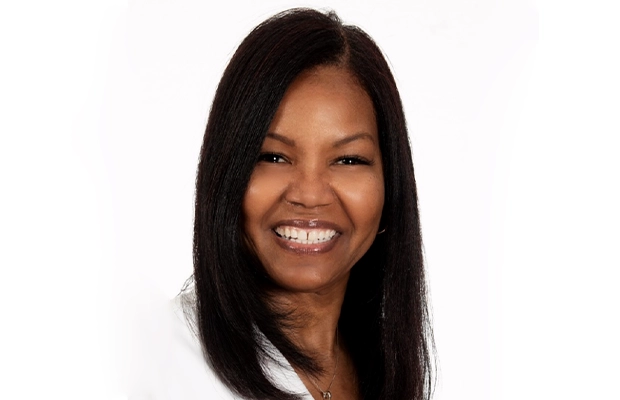
Jacqueline Jackson never saw herself working in health care. However, when she enrolled in the military, two positions were available: a cook or a nurse.
“I was about to turn both of them down and walk away, but my father told me I should take the job as a nurse,” she laughed.
Jackson enlisted and trained as a licensed practical nurse, serving for six years – four years of active duty and two in the reserves. After finishing her service, she planned to return to school to pursue another career, where she became a registered nurse.
While working one of her first jobs as a night nurse, Jackson was offered a supervisor role and found her true calling.
“I loved the camaraderie of coming together as a team,” she said. “That is what kept me in nursing. I realized the one thing I’m good at is team building, motivating people, and getting everyone on the same page so we can deliver the best care possible.”
As a supervisor, she learned how to influence and impact care through the guidance and leadership of others.
“It’s the best part of my job,” Jackson said. “I get to mentor people, motivate them, and then all of that flows down to the patients.”
She now serves as the director of nursing at Jackson Memorial Perdue Medical Center, a long-term care facility where people receive skilled nursing and rehabilitation services after injury, illness, or surgery.
At the center, she encourages Black History Month celebrations to focus on learning about different aspects of Black history.
The team involves patients, too, creating engaging activities – movies, lectures, and events featuring music, food, and more – to lift their spirits, create a sense of pride and belonging, and serve as inspiration.
“To me, Black History Month means an education about our history,” Jackson said. “We get our chance to celebrate who we are, what we’ve come from, what we’ve been through, and our contributions to our country as a whole.”
She’s inspired by the transformation she’s witnessed over her three decades in medicine, including more diverse representation that trickles down to influence care.
“We’re now doctors, anesthesiologists, nursing leaders, surgeons, etc. It took a long time to get here,” Jackson said. “The good thing about Jackson is there is representation from almost every culture – literally – and I think that’s what makes the care as good as it is, and it keeps getting better.”