
Colon Cancer Doesn’t Discriminate: Why Awareness Matters at Any Age
By Carla Palmer
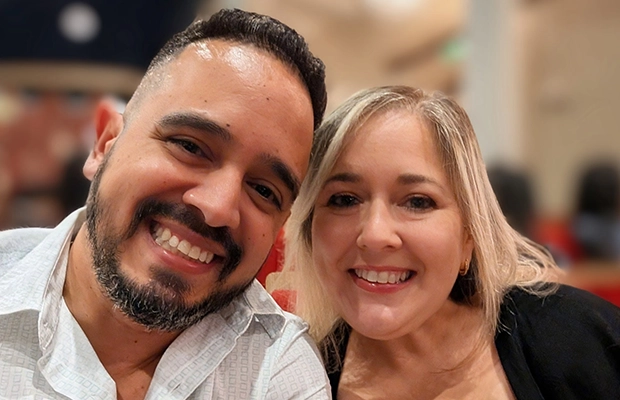
At 38 years old, Renan Peralta never imagined cancer would be part of his story.
Like many people, he brushed off the signs.
“It started with different things,” he said. “Acid reflux, bloating… I would just think, ‘Oh, it’s something I ate.’”
Even when he noticed blood in his stool, he didn’t panic.
“I figured it was probably just a hemorrhoid. It happened once, then went away, so I didn’t think much of it,” Peralta said. “I thought everything except cancer.”
But by December 2022, the symptoms had become harder to ignore. Fatigue set in, and his energy was gone.
Encouraged by his wife, he finally went to see a doctor, and a colonoscopy revealed a mass.
“I woke up from anesthesia and they told me, ‘You need to go to Jackson—you’re having surgery this weekend,’” Peralta said.
Within days, he was in surgery with Gustavo Rubio, MD, a colorectal and general surgeon with Jackson Medical Group.
The diagnosis: stage 2 colon cancer.
“Had it been a week or two later, it could have been very different,” Peralta said.
Thanks to early intervention, he didn’t need chemotherapy or radiation.
“I just cleared my second-year cancer-free,” he said.
Now 41, his experience has reshaped how he views his health, and he hopes others, especially younger adults, take symptoms seriously.
“Don’t be afraid to go to the doctor,” he said. “It’s better to be proactive than to go through a scare like this.”
He also points to a cultural mindset he believes can delay care.
“As a Hispanic male, we’re often taught to shake it off—to not go to the doctor unless something is seriously wrong,” Peralta said. “But you don’t have to wait until something happens. Be proactive. Get checked out.”
Looking back, he wishes he had acted sooner.
“Had I gone to the doctor earlier, done my annual checkups, and been honest about my symptoms instead of saying, I’m fine, I think it could have been detected much earlier,” he said.
For Miguel Hernandez, the diagnosis came later in life—but it was just as unexpected.
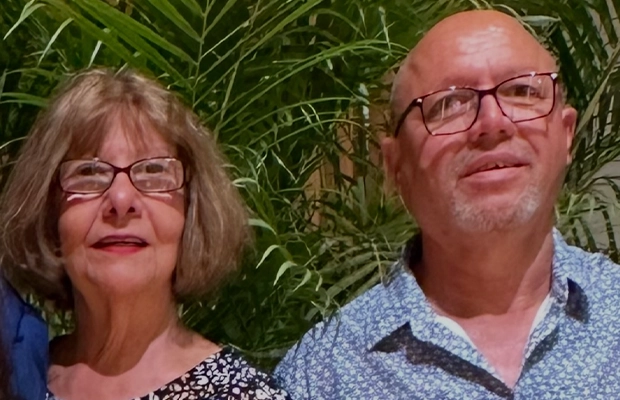
As a 62-year-old Cuban native who has called Miami home for more than three decades, Miguel had always considered himself healthy. He never imagined he would one day be facing cancer.
“The first time I heard the word cancer in my body, it was heavy,” he said.
His journey began with treatment for an initial tumor, undergoing chemotherapy and radiation with his oncology team. But during a follow-up colonoscopy, something concerning appeared.
“They found that it had come back, three centimeters higher than the first one,” Hernandez said. “That’s when they told me—we need to do surgery so it doesn’t come back again.”
Under the care of Dr. Rubio, Hernandez underwent surgery in August of last year.
His recovery included three months with a temporary ostomy bag—something many patients find physically and emotionally challenging. By November, it was successfully reversed.
Today, Hernandez reflects on his journey with gratitude.
“Dr. Rubio, for me, is the best,” he said.
Stories like Peralta’s and Hernandez’s may be different in age and experience, but they share a common thread.
According to the American Cancer Society, while colorectal cancer rates have declined in older adults, they’re rising in younger populations, highlighting the importance of awareness across all age groups.
“Colon cancer is the third most common cancer,” Dr. Rubio said. “And we’re seeing a steady increase in patients younger than 50—about 3 percent per year.”
At the same time, many cases are still diagnosed only after symptoms appear, when the disease is more advanced.
“The majority of cancers that get diagnosed are in patients who already have symptoms,” Dr. Rubio said. “And once you have symptoms, it’s usually a more advanced disease.”
One of the biggest challenges with colon cancer is how easy it is to dismiss early symptoms.
Warning signs can include:
- Rectal bleeding
- Changes in bowel habits
- Persistent abdominal discomfort
- Unexplained fatigue
Colon cancer is one of the few cancers that can be prevented through screening.
“Colonoscopy decreases the rate of colon cancer by at least half,” Dr. Rubio said.
Screening is recommended starting at 45, but symptoms should never be ignored at any age.
“You’re never too young,” Dr. Rubio said. “Any adult with rectal bleeding should be evaluated.”
For Peralta, the signs were easy to dismiss. For Hernandez, the diagnosis came as a shock after a lifetime of good health.
Two different stories—one shared message: colon cancer doesn’t discriminate.
“The most important thing is screening… and not ignoring symptoms—at any age,” Dr. Rubio said.
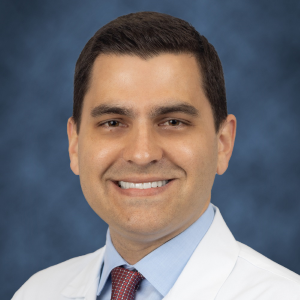
Gustavo Rubio, MD
Colon & Rectal Surgery, General Surgery
Jackson Medical Group
Colorectal And Minimally Invasive Surgery Specialists
9195 Sunset Drive Suite 230, Miami, Florida 33173
Jackson Medical Group – Jackson West
2801 N.W. 79th Ave. Suite 402, Doral, Florida 33122