
Could Sleeping with the Lights on Hurt Your Heart?
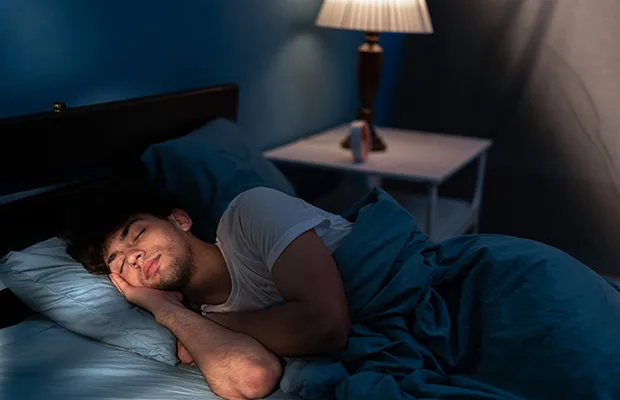
- Nighttime exposure to dim light was linked to thicker left-ventricle walls and reduced heart muscle flexibility in a recent study.
- Light from windows, electronics, televisions, and streetlights may increase nighttime exposure and potentially affect sleep and heart health.
- Blackout curtains, covered electronics, dimmed lights, silenced phones, and sleep masks can help create a darker sleep environment.
New research suggests that exposure to light while sleeping, even at low levels, may be linked to changes in the heart’s structure and function.
The study was published in the European Heart Journal and measured patient’s nighttime light exposure and their cardiac MRI scans to monitor their heart.
Researchers found that people exposed to dim light from a window or underneath a door during sleep had thicker walls in the heart’s left ventricle; the chamber responsible for pumping oxygen-rich blood throughout the body. They also found signs that the heart muscle may have become less flexible. These can be early indicators of changes in heart function.
A brighter bedroom, light from electronics, a television, or outdoor street lighting could expose someone to even more light during sleep.
“Sleep gives your heart time to rest and recover,” said Ivan Mendoza, MD, chief of cardiology at Jackson West Medical Center. “Getting enough good-quality sleep can help keep your blood pressure, heart rate, rhythm and blood sugar at healthy levels, which all lower your risk of heart disease.”
The findings add to growing research on the relationship between good-quality sleep and heart health. Poor sleep is linked to an increase in heart disease risk, as well as stress, weight gain, heart rhythm issues, and an increase in blood pressure.
Reducing nighttime light is a simple step that most people can take. Here are a few tips on how to lower your light intake right before and during sleep:
- Use blackout curtains or shades to block outside light.
- Cover or turn off lights from TVs, clocks, chargers, and other electronics.
- Keep your phone face down and silence notifications.
- Dim the lights before bedtime.
- Use a comfortable sleep mask if your room isn’t completely dark.
While more research is needed to understand whether nighttime light directly causes heart damage, creating a darker sleep environment may be one small way to support both better sleep and heart health.

Ivan Mendoza, MD
Cardiac Electrophysiology, Cardiovascular Disease, Clinical Cardiac Electrophysiology, Internal Medicine
Jackson Medical Group
Jackson Heart Institute – Jackson South
9380 S.W. 150th St. Suite 295, Miami, Florida 33176
Jackson Medical Group – Jackson West
2801 N.W. 79th Ave. Suite 402, Doral, Florida 33122