
FDA Announces Nationwide Blood Pressure Medication Recall: Here’s What You Should Know
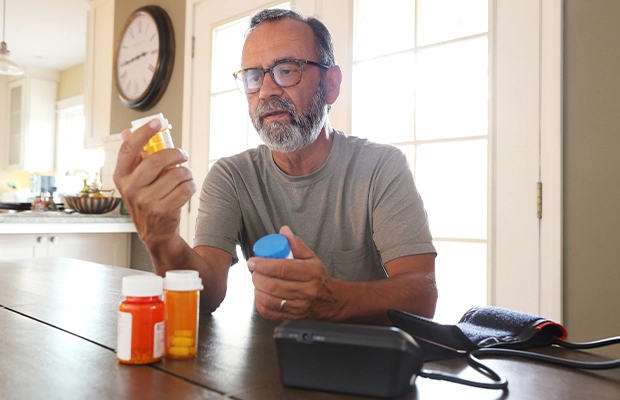
The U.S. Food and Drug Administration (FDA) recently classified a nationwide recall of certain chlorthalidone tablets, a medication commonly used to treat high blood pressure. The bottles of 25 mg tablets being recalled nationwide have the batch number RISA24002 and an expiration date of March 2027.
The recall involves specific lots of the medication that didn’t meet testing requirements for how the tablets dissolve, which could affect how well the medication works.
So, what does a medication recall actually mean, and what should you do if your medication is affected?
What’s a medication recall?
A medication recall occurs when a manufacturer removes a drug from the market because there’s a potential problem with its safety, quality, effectiveness, or labeling. Recalls can be initiated by a pharmaceutical company or requested by the FDA.
Not every recall means a medication is dangerous to everyone who takes it. The FDA uses three classifications to describe the potential risk:
- Class I: There’s a reasonable chance that using the medication could cause serious health problems or death.
- Class II: The medication may cause temporary or medically reversible health problems, but the likelihood of serious harm is low.
- Class III: The medication is unlikely to cause health problems, but there may be another issue, such as a labeling or a packaging problem.
The recent chlorthalidone recall for blood pressure is classified as Class II.
What should you do if your medication is recalled?
First, don’t panic, and don’t stop taking your medication without talking to a healthcare professional.
If you see a recall involving a medication you take, check the information carefully. Recalls often affect specific lots, strengths, expiration dates, or bottle sizes, not every version of the drug.
Look at your prescription bottle for information such as the medication name, dosage, lot, batch number, or expiration date. You can compare this information with the FDA’s recall notice or ask your pharmacist to check it for you.
If your medication is part of the recall:
- Contact your pharmacist or a healthcare professional. They can guide you through the next steps.
- Don’t abruptly stop taking your medication unless you’re instructed to do so by your doctor. For some medications, suddenly stopping treatment can create health risks of its own.
- Ask about a replacement. Your pharmacist or doctor can help determine whether you need a replacement medication or a new prescription.
- Follow instructions for returning or disposing of the medication. Depending on the recall, you may be instructed to return the medication to your pharmacy or another location.
- Seek medical care if you experience concerning symptoms. If you feel unwell or notice a change in your condition, contact your doctor. For severe or emergency symptoms, seek immediate medical attention.
When in doubt, ask your pharmacist or doctor
Medication recalls can be confusing, particularly when information is changing quickly. The most important thing is to find out whether your specific medication is affected and what action, you should take.
Your pharmacist and doctor can help you understand the recall and make sure you continue receiving the treatment you need safely.
For the latest information about medication recalls, visit the FDA’s drug recall resources.
Jackson Medical Group has a team of cardiologists and internal medicine physicians who are ready to take care of you and your health. To make an appointment with a cardiologist or internal medicine physician at Jackson Health System, visit https://jacksonhealth.org/request-an-appointment/.