
Five essential items to ensure your safety at sea on boat day
By: Ruelle Fludd and Luis DeRosa, BSN, RN, EMT-P
Taking the boat out for a day of fishing, swimming, and soaking up the sun is a staple of summertime fun in Miami. Before a long day out on the water, make sure you have these five life-saving items on board.
Life Jackets
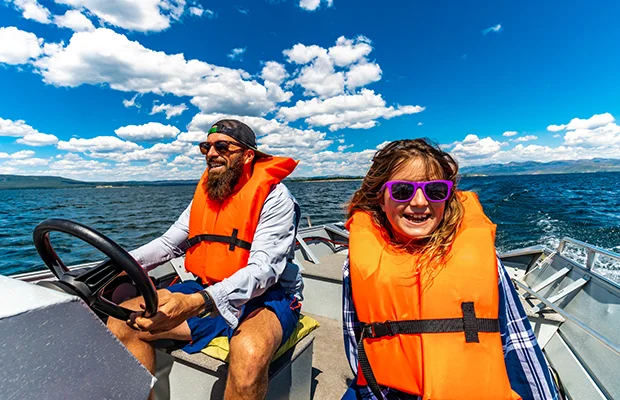
All boats should have one wearable life jacket for each person on board. Any boat 16 feet and longer must also carry a personal flotation device (PFD) that can be thrown overboard. It is a good idea to have a wearable PFD with a whistle and emergency light.
Smoke and Carbon Monoxide Alarms
Install smoke and carbon monoxide (CO) alarms to alert occupants to a fire or CO emissions.
(CO) is a colorless, odorless gas produced by burning fuel. The source of CO can be from boat engines, gas generators, BBQs, and space heaters. This poisonous gas can accumulate due to poorly ventilated spaces, another vessel’s exhaust, and clogged exhaust outlets.
Headache, nausea and dizziness are early symptoms of CO poisoning.
Fire Extinguisher
Have the appropriate fire extinguishers. Make sure they are easily accessible or mount the extinguisher near an exit. Train all boaters on how to use them.
Chargers / Power Outlets
Inspect electrical wiring, connections, cords and battery-charging equipment to ensure they are installed properly and in good condition.
Only use certified chargers for personal electronic devices. Don’t overload power outlets.
Trauma First Aid Kit
Make sure you have a medical first aid kit on your boat to treat burns or trauma. These items include different size bandages, gauze, gloves, and equipment to control severe bleeding like a commercial device tourniquet.
Keep these safety tips in mind for your next trip out on the water.
- Emergency plan: Have a fire emergency plan and practice it.
- Fuel management: Do the ‘sniff test’ to make sure there’s no smell of gasoline anywhere on the boat. Check for leaking fuel or gas lines
- Medical first training: Get trained in CPR, learn basic first aid and learn how to stop life-threatening bleeding.
Luis DeRosa, BSN, RN, EMT-P is the Clinical Outreach & Prevention Coordinator for Trauma & Burns at Ryder Trauma Center.