
Is it Safe to Tan during Peak UV Index Hours?
By: Krysten Brenlla
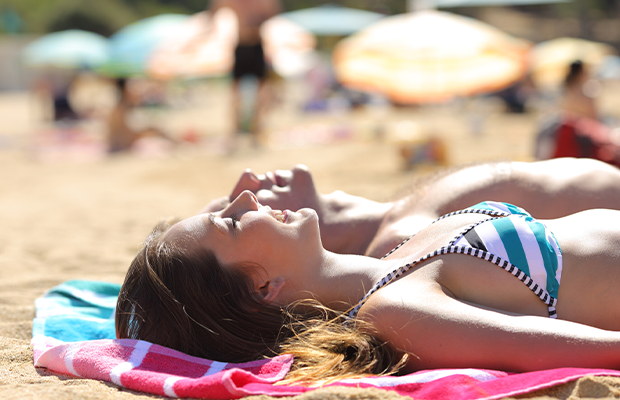
Memorial Day weekend marks the unofficial start of summer, which means long days of sunshine and many opportunities to get the perfect tan. A recent social media trend is taking sunbathing to the next level: lounging in the sun when the Ultraviolet (UV) Index is at its highest.
As seen on trending videos, users are sharing the benefits of monitoring the UV Index and timing tanning sessions when the sun is at its strongest, which is typically in the mid-morning or early afternoon. Social media users are even advising their followers to skip sunscreen and opt for baby oil or sunless tanners to get the “perfect tan.”
However, skipping sunscreen and tanning with a high UV Index can cause serious consequences for your skin.
What’s the UV Index?
The UV Index is a number that provides information on how strong the sun’s UV rays are on a given day. The higher the number, the greater risk of sunburn and damage to your skin without protection.
The UV Index is published by the Environmental Protection Agency with a color-coded scale from one to 11:
- Low UV ray exposure is coded as one to two. With this index, it’s safe for most people to be outside without much risk.
- Moderate to high UV ray exposure is coded as three to seven, and possesses some risk. At this level of UV ray exposure, sunbathers should wear a broad-spectrum SPF 30 or higher sunscreen, sunglasses, and a hat.
- Very high to extreme UV ray exposure is coded as eight or more. At this level of exposure, avoid direct sunlight.
How UV Radiation Can Be Dangerous for Your Skin
According to Saraswati Iobst, MD, a primary care doctor at Jackson Medical Group | South Beach, prolonged tanning, especially under peak UV radiation hours, can cause painful sunburns and increase the risk of changes in skin cells that can lead to skin cancer.
“According to the American Academy of Dermatology, every day, approximately 9,500 people are diagnosed with skin cancer in the United States. Melanoma, which is the most serious type of cancer, can be fatal, and affects thousands of people every year,” Dr. Iobst said.
When skin turns red or tan after sun exposure, it’s a sign of damage from UV rays. The change in color happens because the body produces more melanin, which is a natural pigment that helps protect the skin from further harm.
“UV radiation damages the skin over time, leading to signs of aging that can happen as early as your 20s, depending on skin type and sun exposure,” Dr. Iobst said. “This can mean fine lines and coarse wrinkles, sun spots, dilated blood vessels on your face, loss of skin elasticity, and other changes.”
Protecting Yourself Against the Sun
Although it may feel great to have the perfect tan in time for summer, monitoring the UV Index and protecting yourself against harmful UV rays are crucial for your skin’s health.
“The good news is that skin cancer can be prevented, and one of the most important ways to protect yourself is by developing safe sun practices,” Dr. Iobst said.
Here are a few tips to keep yourself and your loved ones safe this summer:
- For the best protection against the sun, use broad-spectrum sunscreen daily. Choose SPF 30 or higher, and apply it to exposed skin every two hours or immediately after swimming, sweating, or toweling off.
- Wear protective clothing, such as long-sleeved shirts, wide-brimmed hats, or sunglasses with UV protection.
- When the UV Index is at its highest, seek shade and avoid direct sun exposure.
- Avoid products like baby oil or a sunless tanner before lounging in the sun. Avoid tanning beds, which have shown to increase the risk of melanoma by as much as 75 percent.
“If you practice these safe sun habits, you’ll keep your skin looking youthful and healthy for a long time,” Dr. Iobst said.