
More Than Just Summer Heat: How Wildfires Can Affect Your Health
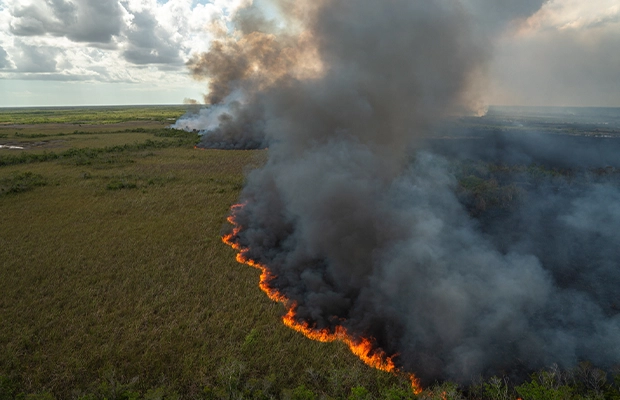
As wildfires continue to burn across parts of South Florida, many residents are noticing more than just hazy skies and the smell of smoke in the air. Smoke from wildfires can travel miles from the source, affecting air quality across entire communities. While the flames may be far away, the tiny particles carried in wildfire smoke can pose significant health risks, particularly for children, older adults, pregnant people, and those with asthma, heart disease, or other respiratory conditions.
Understanding how wildfire smoke affects the body and knowing how to protect yourself can help reduce health risks during periods of poor air quality.
Common smoke exposure symptoms may include:
- Coughing
- Wheezing
- Sore throat
- Burning eyes
- Chest tightness
- Shortness of breath
- Headaches
How to Protect Yourself During Wildfire Smoke Events
Stay Indoors, When Possible
Try to stay indoors with windows and doors closed, especially during periods of heavy smoke. If possible, avoid outdoor exercise or hard physical activity, including running, biking, or yard work.
Use Air Conditioning Properly
Run your air conditioning on recirculation mode to help prevent smoky outdoor air from entering your home. Replacing air filters regularly may also help improve indoor air quality.
Wear a High-Quality Mask Outdoors
If you have to spend time outside in smoky conditions, a properly fitted N95 or KN95 mask can help filter harmful particles from the air. Cloth masks and surgical masks are generally less effective against wildfire smoke particles.
Keep Medications Nearby
People with asthma or chronic lung disease should keep rescue inhalers and medications nearby and follow their treatment plans carefully during smoke events like wildfires.
When to Get Medical Attention
Get medical care immediately if you experience:
- Difficulty breathing
- Severe wheezing
- Chest pain
- Blue lips or fingertips
- Dizziness or confusion
- Symptoms that worsen or don’t get better indoors
Parents should monitor children closely, as children breathe more air relative to their body size and may be more sensitive to smoke exposure.
By staying informed and taking simple precautions, you can reduce your exposure to harmful smoke and protect your health until the air quality improves. If you’re experiencing mild to moderate smoke exposure symptoms, visit your local UHealth Jackson Urgent Care center. For severe cases, go to your nearest emergency room.
Image credit:evergladesnps, Public domain, via Wikimedia Commons
.jpg)