
By: Miranda Torres
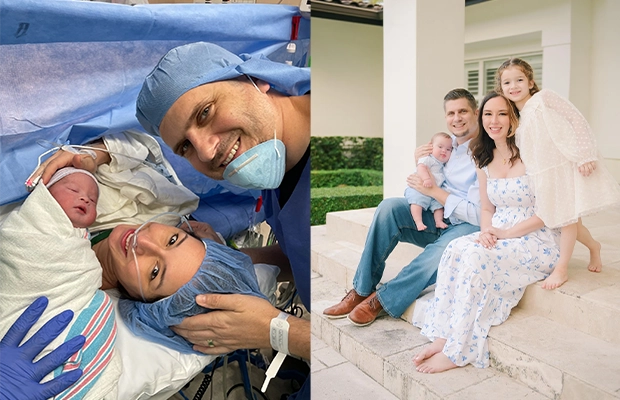
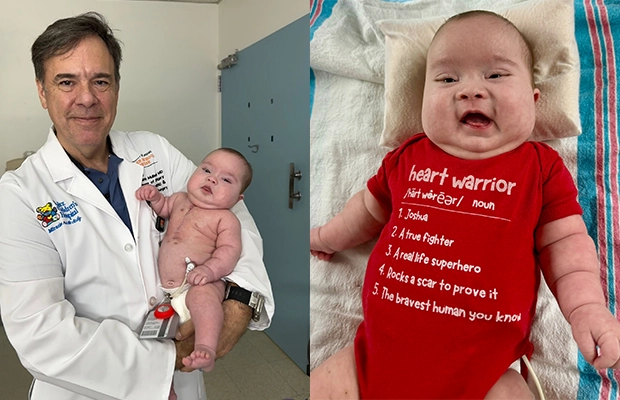
When Jackie Castro found out she was expecting her second child, she and her husband, Jason, were overjoyed. Along with their four-year-old daughter, Ellie, their second child would complete their perfect dream family. When she completed the bloodwork to reveal whether she would be having a boy or a girl, they discovered there was a high probability that their child had Down syndrome. This was confirmed on November 1, 2023.
Castro and her husband were thrilled to be welcoming another child into the world, but they were unsure of how to best support their son. They were put in contact with the families of two Down syndrome kids in the hope of being able to build a community of support.
On December 5, at around 20 weeks gestation, the family met with Madeleen Mas, MD, medical director of pediatric cardiology at UHealth Jackson Children’s Care. After several exams and scans, it was discovered that their baby boy had an atrioventricular septal defect, a congenital heart defect that occurs when there are holes between the chambers of the right and left sides of the heart. Dr. Mas predicted that he would need surgery at around three to four months old and receive follow-up care for the rest of his life.
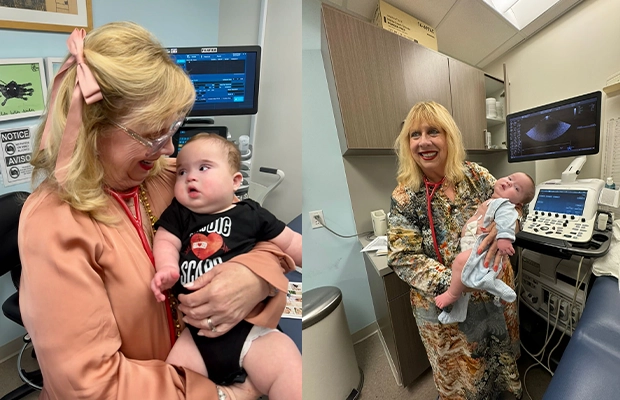
While anxious about the health of her baby and eventual delivery, Castro was reassured by Dr. Mas and her team. She would be followed monthly by Dr. Mas and her team, and her son would receive care at Holtz Children’s Hospital following delivery.
“Part of the beauty of prenatal diagnosis, when you know there is going to be a major problem, is you are able to prepare for it,” says Dr. Mas. “Research shows that prenatal care actually affects surgical outcomes, so knowing in advance is an enormous benefit to the prognosis of the baby.”
During Castro’s third trimester, Dr. Mas coordinated a tour of the Women’s Hospital at Jackson Memorial and a meeting with Leonardo Mulinari, MD, chief of pediatric and congenital heart surgery, so Castro would feel comfortable with the team of specialists who would be caring for her baby..
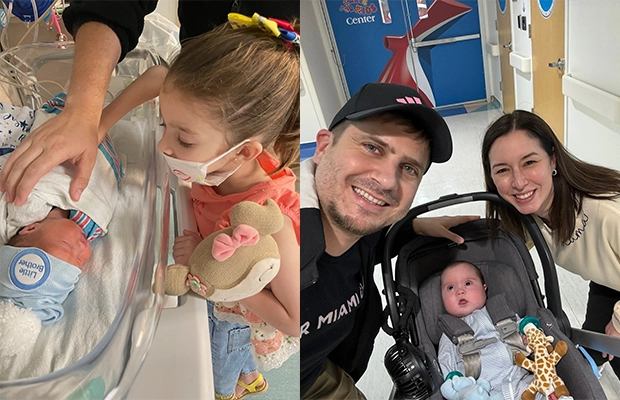
On April 10, Castro gave birth to a happy baby boy named Joshua. He remained inpatient in the neonatal intensive care unit (NICU) for 23 days before finally going home..
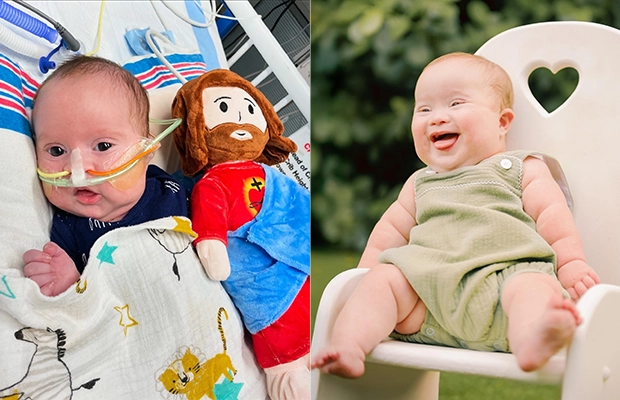
However, just three days later, Joshua began breathing faster and harder than when he was discharged from the NICU. Dr. Mas recommended he be taken to Holtz Children’s immediately. Little did the Castro family know they would be residents of the pediatric intensive care unit (PICU) for several months.
Once in the hospital, Joshua was started on oxygen, connected to monitors to measure his perfusion, and had a PICC (peripherally inserted central catheter) line placed. On May 22, he underwent a procedure to close a patent ductus arteriosus (PDA), an opening between the aorta and pulmonary artery that had persisted after birth.
At the beginning of June, an echocardiogram revealed that there was too much blood flow to his lungs, causing him to breathe hard and fast. Dr. Mulinari performed a pulmonary artery banding, a surgical procedure that reduces excess blood flow to the lungs. The procedure helped ease Joshua’s work of breathing. Dr. Mulinari wanted Joshua to get stronger and reach 5 kilograms so he would be ready for the operation to fix the atrioventricular septal defect.
For the next four months, Joshua was in and out of the pediatric intensive care unit at Holtz Children’s, battling COVID-19, recurrent fevers, sapovirus, and a blood infection. During this time he received antibiotics and blood transfusions. He also had a gastric feeding tube inserted to help him gain weight. “The child life team at Holtz Children’s was incredibly helpful, especially with Ellie. They created a book about Joshua’s care and his ‘zipper’ (scar) and made a stuffed animal with his original heartbeat to help her understand her brother’s medical journey,” said Castro.
At the beginning of September, Joshua was readmitted to the PICU because of fevers. On a positive note, his weight had surpassed 5 kilograms and surgery could proceed.
On September 17, Dr. Mulinari, performed open heart surgery, which required cardiopulmonary bypass (CPB) to provide oxygenation and circulation of blood to Joshua’s organs. Once CPB was established, the previously placed pulmonary band was removed and the heart was opened. Dr. Mulinari placed a patch to close the holes between the chambers of the right and left sides of the heart. Joshua then came off CPB, his chest was closed, and remarkably, he was extubated that same day.
Joshua was able to return home with his family just five days after his surgery. “His first visit to my office after the surgery, you could hardly even tell he had a heart disease at all,” said Dr. Mas. “This was a very complicated case where many other organ systems were affected but we had such support from all of the multidisciplinary team that this is one of the best outcomes I’ve seen in my 34 year long career.”
The road to recovery will include follow-up with specialists in cardiology, immunology, endocrinology, hematology, neurology, genetics, and gastroenterology. Joshua will also continue to have speech, physical, and occupational therapy on an outpatient basis, as well as feeding therapy to help reduce the need for the G-tube.
“Dr. Mas is an angel and she treats him like another grandchild. I’ll never be able to thank her enough,” said Castro. “There’s so many parts to the team from nurses to doctors to therapists, and they not only took care of Joshua but our entire family. There is a lot of gratitude on our part because they really loved Joshua, and we felt it. He was in the best hands.”
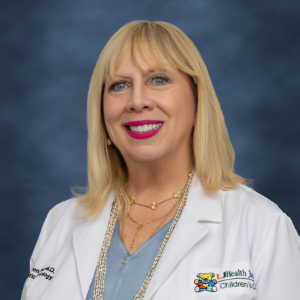
Madeleen Mas, MD
Pediatric Cardiology
Jackson Medical Group
UHealth Jackson Children’s Care Pediatric Cardiology | Coconut Grove
3659 South Miami Ave. Suite 3002, Miami, Florida 33133
UHealth Jackson Children’s Care Pediatric Cardiology | Kendall
8950 North Kendall Drive Suite 308W, Miami, Florida 33176