
The Scariest Things About Halloween: Dark Streets & Distracted Drivers

By: Wendy Stephan, PhD MPH.
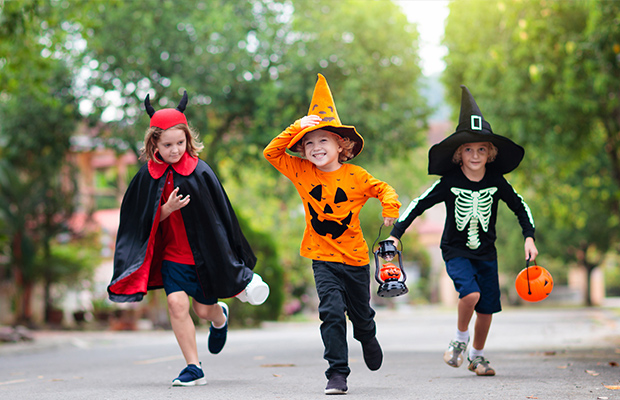
Halloween can be a great time to put on costumes, meet the neighbors, and enjoy a good scare. As you put out the candy and spooky décor, also make plans to ensure that this holiday is a safe one for your family.
Most parents don’t realize that Halloween is the most common night for a child to get hit by a car. The main safety focus for families should be to improve the visibility of children as they trick-or-treat or walk outdoors at night.
Here are some tips on how to keep your little villains and superheroes out of harm’s way:
Be Visible
- Take young trick-or-treaters out before sundown, or have children carry a glow stick or flashlight.
- Make sure your kids wear reflective clothes or wear flashers used by joggers and cyclists.
- Buy reflective tape or wristbands at sports supply shops and glow sticks at party supply shops.
- Keep in mind that even friendly dogs may be spooked by costumes – remove head coverings if a dog approaches and speak so they can recognize you.
See Clearly & Cross Safely
- Decorative makeup is safer than a mask or hood, which can block a child’s view of an oncoming vehicle.
- If parents have several small kids in tow, a wagon can safely transport them across the streets.
- Choose neighborhoods with sidewalks for trick-or-treating and hold hands with kids likely to run off.
- Halloween is a great time to teach older kids the importance of crossing at street corners (not mid-block), and to make eye contact with drivers before crossing.
Drive with Caution
- Drivers should be on alert for kids and use headlights starting at 5:30pm.
- Grownups sipping cocktails at Halloween parties should call for a ride to be sure they get home safely.
- Teens, in particular, may be roaming around late, so a distracted or drunk driver can be especially scary on Halloween!
Toxic Treats?
Common calls to poison control on Halloween include the following concerns:
- Parents calling to report kids biting into glow sticks and allergic reactions to face paint or contact lenses.
- Parents calling to complain about dry ice burns and worries about candy that looks suspicious.
- Candy might have sugar crystals or bubbles visible on the surface, and is no cause for alarm.
- Chocolate that has melted and cooled may look chalky or powdery, and is no cause for alarm.
- Candy with damaged packaging should be discarded.
- Make sure to save into the poison control number, 1-800-222-1222, into your phone for easy access. The hotlines answers calls 24 /7.
Poison centers and hospitals do not routinely receive reports of candy tampering and do not offer x-raying of candy. Feel free to call the poison control center at 1-800-222-1222, if you have concerns about any type of poisoning, year round.
Safe Kids Worldwide has more information on Halloween safety available at https://www.safekids.org/tip/halloween-safety-tips. Together we can make sure our little ones have a great night of sweets and treats — without injuries to spoil the fun.
Wendy Stephan, PhD MPH, is the chair of the Miami-Dade County Injury Prevention Coalition, and is the health education coordinator at the Florida Poison Information Center – Miami.