
The Super Bowl, a Brain Aneurysm, and the Team That Saved a Life
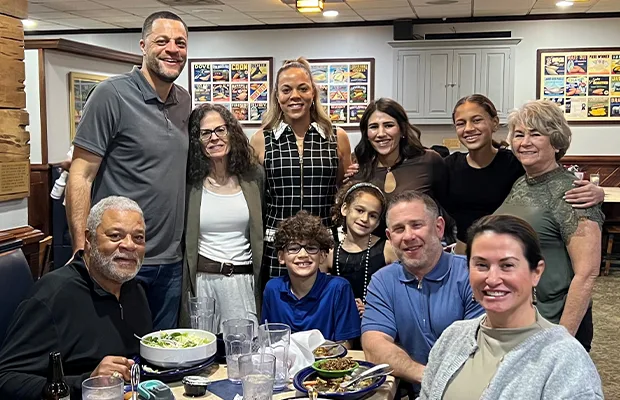
Two years ago, 39-year-old Kelly Moorehead was headed to Arizona to support her brother, a coach for the Philadelphia Eagles, as his team competed in the Super Bowl.
On the day she was set to leave for the game, Moorehead was at home packing last-minute items when she started to have what she later described as the worst headache of her life. Along with the excruciating pain, she was also sweating a lot and experiencing neck discomfort. A friend encouraged her to go to the emergency room. Determined to still make it to the Super Bowl, she changed her flight and went to a nearby urgent care center instead. There, she was quickly sent to the ER.
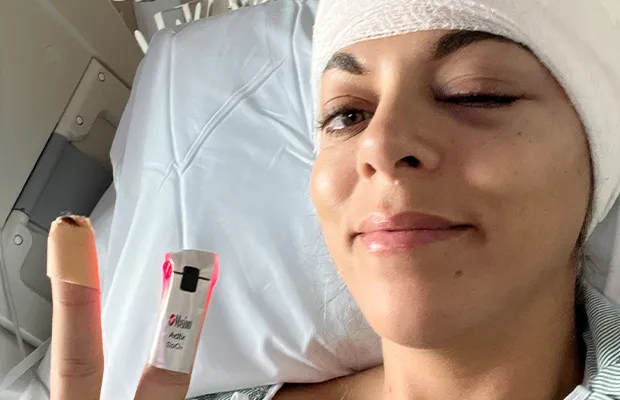
Doctors performed CT scans and said she had a brain bleed caused by a ruptured aneurysm. With the rest of her family already in Arizona for the big game, she was transferred to Jackson Memorial Hospital.
At the hospital, she met Robert Starke, MD, co-director of endovascular neurosurgery at Jackson Memorial, and a UHealth – University of Miami Health System neurosurgeon and neuroradiologist.
“Historically, about 25 percent of people with a ruptured brain aneurysm die right away, and another two-thirds of people end up with a significant disability,” Dr. Starke said. “Because we treat so many of these patients, we have much better outcomes.”
He’s also one of the few specialists trained in treating brain aneurysms endovascularly by going through the artery in an arm and a leg to deliver devices to the area of concern, or open microsurgery where part of the skull is temporarily removed to place a surgical clip at the site of the aneurysm, stopping the bleed at its source.
“We’re committed to these patients and doing everything possible to ensure they have good outcomes,” Dr. Starke said.
Life-saving Surgery
Dr. Starke determined that a microsurgical approach was best for Moorehead’s condition due to the complexity of the aneurysm. Despite the shock of her diagnosis, she felt at ease with the medical team and confident in their expertise.
“Dr. Starke made me feel very comfortable. The fact that I was awake and talking meant my condition was good,” Moorehead said. “I couldn’t believe they were going to cut my head open because I’ve been in good health my entire life.”
Her brother was ready to hop on the next flight to Miami to be by her side, but she encouraged him to stay for the big game with his team. With surgery planned for the following day, Moorehead was nervous but said hospital staff helped her stay calm.
“I remember the nurses were so good at making me feel relaxed despite it all,” she said.
Her mother arrived just in time for the surgery, which successfully stopped the bleeding. But even with the procedure behind her, Moorehead wasn’t out of the woods yet.
“Patients with these conditions remain at high risk for complications in the two weeks following treatment,” Dr. Starke explained. “We have talented neurosurgery and neurocritical care teams who are experts at spotting the early signs of problems.”
One of the potential life-threatening risks is called vasospasm, where blood in the brain starts getting absorbed and irritating the blood vessels, leading to a stroke or stroke-like symptoms days after surgery.
Under the team’s watchful care, Moorehead recovered and was discharged.
“Now looking back, reflecting on how different the outcome could have been, I’m just so grateful everything went smoothly,” she said.
A Full Recovery
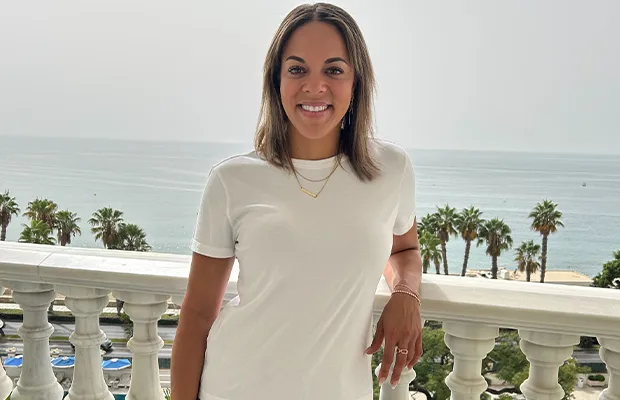
Moorehead was out of work for about six weeks as she recovered. Like many patients, she dealt with lingering symptoms from the initial brain bleed—persistent brain fog, difficulty reading, and a low-grade headache that lasted for months. But with time, her symptoms began to fade.
This year, the two-year anniversary of her aneurysm once again fell on Super Bowl weekend. And just like before, her brother was headed to the big game with the Eagles. This time, though, Moorehead made it to the game to cheer them on.
“It felt like a do-over for both of us,” she said. “And this time, the Eagles came out on top.”
Dr. Starke, who remembered the family’s journey, sent her a message wishing them luck before the game.
“His message was the cherry on top,” Moorhead said.
Now, reflecting on everything she went through, Kelly said she is grateful she ended up at Jackson.
“I want to thank the entire team for treating me the way they did. I’m here to tell the story and that’s all because of them,” she said. “I feel so indebted to them for saving me.”
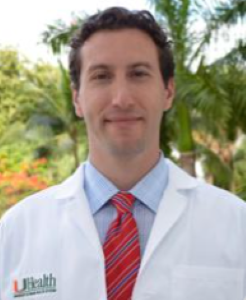
Robert Starke, MD
Neurological Surgery
Jackson Memorial Hospital
1611 NW 12th Ave. Miami, Florida 33136
University of Miami Health System
1295 NW 14th St. Suite 1700, Miami, Florida 33125