
The Test That Could Save Your Young Athlete’s Life, and It’s Free
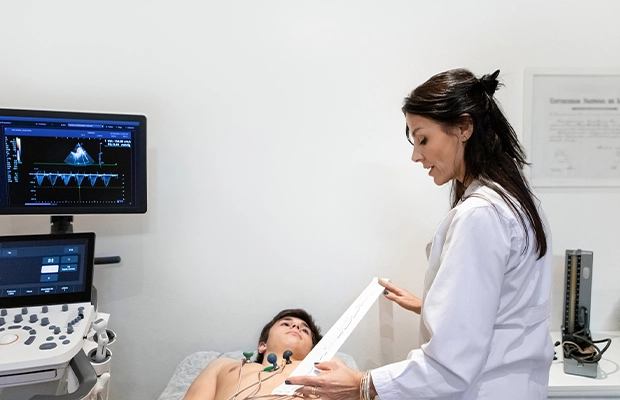
As families gear up for back to school and fall sports, doctors want parents to know something important: a routine physical alone isn’t enough to keep young athletes safe.
Dr. Madeleen Mas, medical director of pediatric and fetal cardiology at UHealth Jackson Children’s Care, has helped lead a major push to bring free heart screenings, or an electrocardiogram (EKG), to every student athlete in Miami-Dade County.
For young athletes, that screening can be lifesaving. Sudden cardiac death in young athletes is rare, but the stakes are enormous.
“It’s a low risk, but when it does occur, it’s such a catastrophic event that it affects families and whole communities,” Dr. Mas said. “Even one life saved is worth it.”
The scary part is that most young athletes feel fine – until they don’t.
“Most of these cases will be asymptomatic until they’re put in the stressful situation of very competitive sports,” Dr. Mas explained. “That can unmask the underlying disease that they just didn’t know about.”
An annual checkup looks at a child’s overall health. A sports physical is more targeted, but even that can miss things. Adding an EKG, a simple five-minute test that records the heart’s electrical activity, makes a real difference.
A sports physical alone catches unknown cardiac issues about 7 to 30 percent of the time. When you add an EKG, detection jumps by 60 to 80 percent.
“It’s a very simple, easy, non-painful procedure,” Dr. Mas said. “Small stickers are placed on the chest and connected to electrodes that print out the heart’s activity, revealing heart rate, rhythm, chamber size, and thickness that could signal a hidden problem.”
Dr. Mas explains that there’s an added risk facing Black athletes. They’re more likely to develop thicker heart muscles, which can make it harder for doctors to tell the difference between healthy changes caused by exercise or hypertrophic cardiomyopathy. This inherited condition causes the heart muscle to become abnormally thick, making it harder for the heart to pump blood.
“There’s a much higher incidence of sudden cardiac death in African American and Caribbean Black athletes when cardiomyopathy is present,” she said. “Black basketball players face a risk three times higher, so it’s really important for them to get screened.”
Parents should never ignore certain warning signs in their kids, such as:
- Chest pain or discomfort during physical activity
- Palpitations, or a racing, irregular heartbeat during exercise
- Dizziness or fainting during or after exertion
- Any of the above symptoms, even without exercise
Family history matters, too. Before your child’s next physical, be ready to talk about:
- Any sudden, unexplained death in a relative under age 50
- Family members with irregular heartbeats or an early pacemaker
- Early heart attacks or heart disease before age 50
- High blood pressure, or high cholesterol
Dr. Mas recommends going back at least two generations, and learn that medical history – finding a hidden heart condition in a young athlete can lead to screening, potentially saving an entire family.
In addition to yearly sports physicals and EKGs, there are a few simple steps every young athlete can take to stay safe while they’re playing sports or exercising:
- Drink at least two liters of water daily, especially on active days
- Use urine color as a hydration check: it should be a light-yellow color, like lemonade
- Don’t ignore symptoms, since even a normal EKG doesn’t rule out future problems
- Keep up heart healthy habits, such as exercise, good nutrition, and blood pressure checks
UHealth Jackson Children’s Care has made EKG screening free and accessible across South Florida. Since last summer, its mobile EKG team has visited Miami-Dade County high schools, charter schools, and sports clubs, screening about 3,000 student athletes. Free EKGs are also available with or without a $25 sports physical for student athletes at all seven UHealth Jackson Urgent Care centers, now through November 30.
“Don’t be afraid to take advantage of the resources available,” Dr. Mas urged parents. “EKG screening is free and accessible for everyone.”
To schedule a free EKG for your student athlete, visit a UHealth Jackson Urgent Care center, or ask your school about mobile screening dates. Details are available at www.jacksonurgentcare.com/lab-testing/ekg.
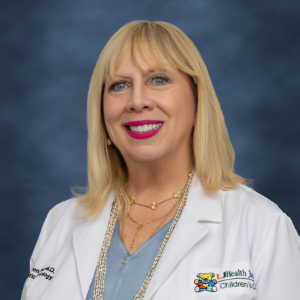
Madeleen Mas, MD
Pediatric Cardiology
Jackson Medical Group
UHealth Jackson Children’s Care Pediatric Cardiology | Coconut Grove
3659 South Miami Ave. Suite 3002, Miami, Florida 33133
UHealth Jackson Children’s Care Pediatric Cardiology | Kendall
8950 North Kendall Drive Suite 308W, Miami, Florida 33176