
Understanding Amniotic Fluid Embolism: The Rare Condition That Took Hailey Okula’s Life After Childbirth

Rodrigo Ruano, MD
News of nurse influencer Hailey Okula’s tragic passing after childbirth has left many families and expectant parents with questions. As a fetal surgeon, maternal-fetal medicine specialist, and OB-GYN, I want to explain the condition that led to her death, amniotic fluid embolism (AFE).
AFE is a rare, unpredictable, and life-threatening complication of childbirth. It happens when amniotic fluid — the fluid surrounding a baby in the womb — enters the mother’s bloodstream. The body reacts as if it’s encountering a foreign substance, triggering a severe response similar to an allergic reaction or infection. Unfortunately, the risk of maternal death related to this condition remains high.
Because AFE is so unpredictable, it strikes quickly. A healthy mom can go from stable to critical in a matter of minutes, and it can happen during both vaginal and C-section deliveries. It typically takes place during labor or within 30 minutes after delivery, often causing sudden heart and lung failure, low blood pressure, breathing difficulties, and heavy bleeding that’s difficult to control.
AFE affects approximately seven out of every 100,000 deliveries. Unfortunately, they’re no known risk factors, and it can’t be diagnosed in advance. However, current research suggests a strong connection to placenta accreta spectrum—a condition where the placenta grows too deeply into the uterine wall—where the risk of AFE may be up to 10 times higher.
Experts still don’t fully understand why AFE happens or why some patients survive while others don’t. What we do know is that fast action matters. Quick cardio-pulmonary resuscitation (CPR), blood transfusions, and a skilled multidisciplinary medical team offer the best chance of survival.
If you’re pregnant or planning a family, remember: AFE is rare. Most births are safe and routine. Talk to your doctor about any concerns, ask questions, and know that we’re prepared for emergencies if and when they happen.
Dr. Rodrigo Ruano is director of the UHealth Jackson Fetal Care Center and the division chief of UHealth Jackson Maternal-Fetal Medicine.
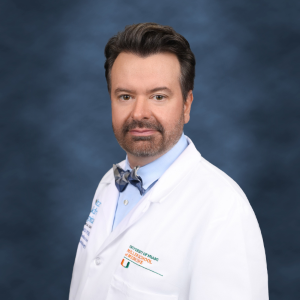
Rodrigo Ruano, MD, PhD
Maternal-Fetal Medicine, Obstetrics & Gynecology
Dept. OBGYN & Reproductive Science – Maternal-Fetal Div
1150 NW 14th Street Miami, Florida 33136
Doral Commons
7400 N.W. 104th Avenue Suite D103, Doral, Florida 33178
UHealth Jackson Fetal Care Center
1611 NW 12 Avenue, East Tower, 7A, Holtz Children’s Hospital Miami, Florida 33136
UHealth Kendall
8932 S.W. 97th Avenue Suite L, Miami, Florida 33177