
Understanding Brain Aneurysms – What We Can Learn from Kim Kardashian’s Diagnosis

In a recent announcement, Kim Kardashian revealed that doctors found “a little aneurysm” in her brain during an imaging scan. While this news may be alarming, it’s also an opportunity to learn more about what aneurysms are and how they behave.
What’s a brain aneurysm?
When your blood flows through arteries, the vessel walls are normally strong and smooth. A brain aneurysm (also called a cerebral aneurysm) happens when a weak spot in an artery in or around the brain bulges outward, creating something like a balloon on the side of the vessel.
If the bulge stays small and stable, people often don’t even know it’s there. But if the aneurysm grows or bursts, it can cause serious bleeding in the brain (a hemorrhagic stroke), which is life-threatening.
Symptoms to watch for
Small, unruptured brain aneurysms often cause no symptoms at all. That means you can have one and not know it.
Here are two scenarios; what you might notice if an aneurysm is pressing on surrounding areas and what you might notice if it ruptures.
If pressing or unruptured but growing, you could experience:
- Pain above or behind one eye
- Vision changes (double vision or trouble focusing)
- Numbness or weakness on one side of the face
- Difficulty speaking or concentrating
If the aneurysm bursts, these sudden or dramatic symptoms could appear:
- A thunder-clap headache (the “worst headache of my life”)
- Stiff neck, nausea, vomiting
- Loss of consciousness, confusion, drooping of one side of face or body
“Kim Kardashian’s story highlights the benefits of early assessment before aneurysms cause a problem. If these lesions are found, they can be treated if they’re high risk or monitored for growth if low risk,” said Robert M. Starke, MD, co-director of endovascular neurosurgery at Jackson Memorial Hospital, and a UHealth – University of Miami Health System neurosurgeon and neuroradiologist.
How do doctors screen or diagnose a brain aneurysm?
Since many aneurysms are silent and never cause symptoms, routine screening isn’t common. But there are situations where screening can be recommended. A magnetic resonance angiography (MRA) is a non-invasive medical imaging test that often catches abnormalities like blood clots, aneurysms, or blockages that can’t be caught by other common testing such as a magnetic resonance imaging (MRI).
When screening may be considered
- If you have two or more first-degree relatives (parent, sibling, child) who had an aneurysm or a brain bleed from an aneurysm.
- If you have a known genetic condition that raises aneurysm risk.
- If you have other high-risk factors and you and your doctor decide monitoring makes sense.
How can you help prevent an aneurysm or reduce risk of rupture?
While we can’t control everything, there are many things we can do to reduce risk. The news around Kim Kardashian’s story reminds us of this: studies suggest that stress by itself doesn’t directly cause an aneurysm, but it can raise blood pressure and worsen vessel wall health, so managing stress is useful.
Here are other prevention tips:
- Manage blood pressure: High blood pressure is one of the biggest risk factors for aneurysm formation and rupture.
- Quit smoking: Smoking increases the risk of aneurysms and makes rupture more likely.
- Eat a healthy diet.
- Keep alcohol in check.
- Maintain healthy weight and activity level.
- Avoid stimulant drugs and head injury.
- Manage other health conditions like high cholesterol, diabetes, or kidney disease.
If you or someone you know has sudden symptoms of an aneurysm, call emergency services immediately or visit your nearest emergency room.
Image: David Shankbone, CC BY 3.0, via Wikimedia Commons

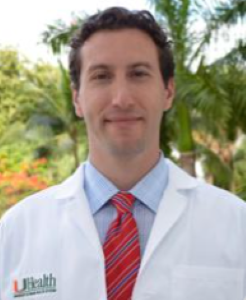
Robert Starke, MD
Neurological Surgery
Jackson Memorial Hospital
1611 NW 12th Ave. Miami, Florida 33136
University of Miami Health System
1295 NW 14th St. Suite 1700, Miami, Florida 33125