
What Debby Ryan’s Brain Injury Can Teach Us About Recovery

- Repeated concussions can cause lasting symptoms involving headaches, memory, concentration, vision, balance, sensory processing, and emotional function.
- Brain injury symptoms may be invisible. People experience difficulties completing everyday tasks despite appearing physically well.
- Specialized rehabilitation helps people regain skills, build independence, and work toward meaningful goals through individualized treatment and support.
Actor Debby Ryan recently opened up about her experience with a life-altering brain injury. Her story highlights something many people don’t realize: Brain injuries can affect much more than what we see.
Ryan, known for her roles in Disney Channel television shows, shared that she has experienced five concussions with the fifth causing uncontrollable shaking for more than a minute.
Ryan spent six months in neurological rehabilitation experiencing worsening migraines, sensitivity to light and sound, and difficulty processing visual information.
The actor hasn’t publicly shared a specific diagnosis, but her experience highlights the wide range of challenges that can follow a brain injury.
Brain Injuries Affect More Than Movement
A concussion is a mild traumatic brain injury. It can affect how the brain functions and may cause symptoms that impact everyday life.
Depending on the injury, people may experience headaches, problems with memory and concentration, difficulty balancing, changes in vision, sensitivity to light or sound, or challenges with communication and emotions.
Most people with just one concussion will recover, however repeated concussions or more severe forms of brain injury can have a longer recovery course.
“Brain injury recovery can be challenging as the brain is critical for both your physical, cognitive, emotional, and mental function,” said Unoma Akamagwuna, MD, chief of pediatric physical medicine and rehabilitation at Christine E. Lynn Rehabilitation Center for The Miami Project to Cure Paralysis at UHealth/Jackson Memorial. “A person may be dealing with changes in memory, attention, vision, balance, or sensory processing that aren’t obvious to those around them.”
They may look physically fine while still struggling with everyday tasks.
Rehabilitation Helps Patients Move Forward
Recovery from a brain injury can look different for everyone. Rehabilitation focuses on helping each patient regain skills, build independence, and return to the activities that matter most to them. Treatment focuses on movement, communication, memory, attention, and everyday activities.
“Recovery isn’t always about returning to exactly who you were before an injury,” said Dr. Akamagwuna. “It’s about returning to your most independent and functional self. We help each person build on their strengths, work toward their goals, and find a path forward.” For people recovering from a brain injury, progress may come one milestone at a time. Specialized rehabilitation can help make those milestones possible. To learn more about the rehabilitation services at Lynn Rehabilitation Center, visit jacksonrehabcare.org.
Image credit: Movieguide®, CC BY-SA 2.0, via Wikimedia Commons

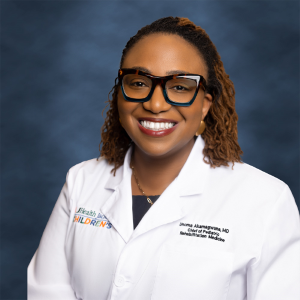
Unoma Akamagwuna, MD
Brain Injury Medicine, Pediatric Rehabilitation Medicine, Pediatrics, Physical Medicine & Rehabilitation
Christine E. Lynn Rehabilitation Center
1611 N.W. 12th Ave. Miami, FL 33136