
What to Know About Chronic Kidney Disease

By: Krysten Brenlla and Franco Cabeza-Rivera, MD
Kidney diseases rank among the top causes of death in the United States, affecting around 37 million people, or roughly one in seven Americans. Alarmingly, nearly 90 percent of those with chronic kidney disease (CKD) are unaware of their condition, mainly because it develops slowly for months or years without symptoms.
It’s what happened to Sunisa “Suni” Lee, the U.S. gymnastics star and gold medalist currently competing in the 2024 Summer Olympics. According to an article on Lee written by The New York Times, she first knew something was wrong when her body began to randomly swell.
After several tests, Lee’s medical team found that her kidneys weren’t working properly.
“It’s important to note that kidney disease mainly stems from metabolic problems – diabetes, obesity, hypertension – that primary care doctors should be able to help patients control,” said Franco Cabeza-Rivera, MD, a nephrologist at the Miami Transplant Institute (MTI), an affiliation between Jackson Health System and UHealth – University of Miami Health System. “However, there are the other groups of kidney diseases that are hereditary or genetic.”
For Lee, her kidney disease stemmed from family history. It caused her body to retain so much water that her hands and feet swelled, to the point where it disrupted her balance and affected her gymnastics training.
“As a group, these kidney diseases can be characterized as glomerulonephritis, or inflammation of the filtering units of the kidney, causing leakage of protein or blood,” Dr. Cabeza said. “These kidney diseases may show symptoms like swelling, bubbly urine, or blood in the urine.”
Here’s what you need to know:
Your kidneys play a crucial role in filtering wastes and excess fluids from your blood, which are then eliminated through urine. They also work to help make red blood cells, balance minerals throughout your body, maintain your blood pressure, and keep your bones healthy. However, in advanced stages of CKD, the kidney’s filtration process is impacted, leading to dangerous levels of fluids, minerals, and waste in your body.
Symptoms to look out for:
- Changes in urination: Increased or decreased urination, especially at night, and blood or bubbles in urine.
- Swelling: Puffiness around the eyes, ankles, feet, hands, or the entire body.
- Skin changes: Dry or itchy skin, or skin rashes.
- Other symptoms include nausea, vomiting, loss of appetite, fatigue, muscle cramps, headaches, and trouble sleeping.
Who’s at risk?
While anyone can develop CKD, some groups are at a higher risk. Risk factors include:
- Age, with people 65 and older most likely to be diagnosed.
- Race and ethnicity
- Family history
- Other health conditions, like diabetes, high blood pressure, heart disease, obesity, or past kidney damage.
- Smoking
- Frequent use of medications that can damage the kidneys.
- Kidney stones
- Kidney tumors
What you should do when diagnosed:
“Once a patient is diagnosed with kidney disease, they need to be referred to a nephrologist,” Dr. Cabeza said. “To slow down the progression, the key is to control the cause of it – if you’re obese, you need to lose weight, or if you have diabetes, you need to control it. For acute cases, if you’re on pain medication, such as many athletes like Suni, they need to slow their intake and meet with a nephrologist for care.”
On the other hand, based on the degree of the kidney’s function, and if the patient is approaching dialysis for treatment, they can be referred for a kidney transplant evaluation. If patients are referred early enough, they may be transplanted before starting dialysis.
“Living kidney donation is the best way to approach kidney disease in the long run,” Dr. Cabeza said. “It provides significant survival benefits, and both the donor and recipient can live long and healthy lives with living kidney donation.”
For more information on MTI’s kidney transplant program, or to make an appointment, visit our website at https://transplant.jacksonhealth.org/programs/kidney-transplant/.
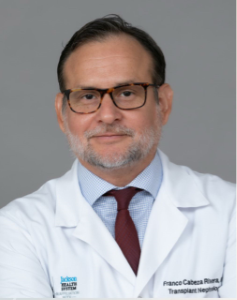
Franco Cabeza-Rivera, MD
Internal Medicine, Nephrology
Miami Transplant Institute
1801 N.W. 9th Ave. Miami, Florida 33136