
Recognizing the Signs of a Stroke: Learn from Jamie Foxx’s Brain Bleed
By: Krysten Brenlla and Selina Ancheta
Jamie Foxx recently revealed he suffered a brain bleed that led to a stroke. The news has raised awareness about the importance of recognizing the early warning signs of a stroke. Whether for yourself or someone you care about, knowing when to seek immediate medical attention can be lifesaving. At Jackson Health System, we believe it’s essential for everyone to understand how to BE FAST when stroke symptoms appear.
What’s a stroke?
A stroke happens when blood flow to the brain is interrupted by either a blocked artery (ischemic stroke) or a ruptured artery, causing bleeding in the brain. A brain bleed, like the one Foxx experienced last year, typically falls under the category of a hemorrhagic stroke, which can be caused by high blood pressure, tangled blood vessels in the brain (arteriovenous malformations), or aneurysms.
Signs and Symptoms to Look Out For
Stroke symptoms can develop suddenly and can vary in severity. Recognizing these symptoms early is crucial, as fast medical intervention can reduce brain damage and improve recovery chances. Be on the lookout for the following signs:
- Balance problems: A person may not be able to walk in a straight line. Their balance or coordination may be suddenly off.
- Vision changes: Sudden loss of vision in one or both eyes or double vision should be taken seriously.
- Facial drooping: One side of the face may droop or feel numb. Ask the person to smile. If one side doesn’t move as well as the other or the face looks uneven, it’s a warning sign.
- Arm weakness: A person may struggle to lift one arm or may have noticeable weakness on one side of their body. Test this by asking them to raise both arms at the same time.
- Speech difficulty: Speech may become slurred or hard to understand. Ask the person to repeat a simple sentence like, “The sky is blue.”
- Confusion or difficulty understanding: Along with speech difficulty, stroke victims may suddenly have trouble speaking or understanding simple questions or instructions.
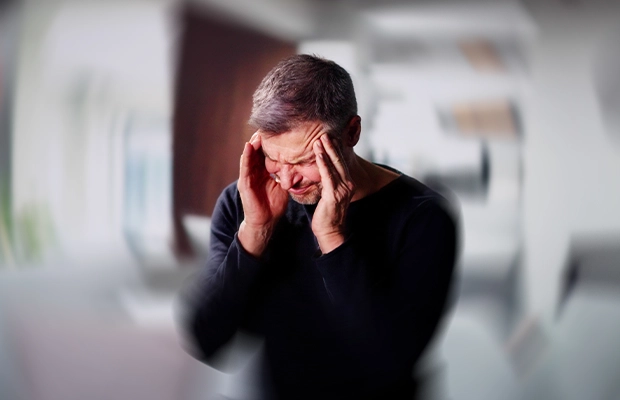
- Sudden headache: A severe headache with no clear cause, especially if it’s accompanied by dizziness, confusion, or vision problems, could signal a brain bleed or stroke.
In the case of a hemorrhagic stroke, or a brain bleed, symptoms may also include memory loss, nausea, vomiting, and loss of consciousness.
When to Go to the Hospital
If you or someone around you is experiencing stroke symptoms, it’s important to act quickly. At Jackson, we use the BE FAST acronym to identify warning signs:
- B: Balance and coordination – A person won’t be able to walk in a straight line.
- E: Eyesight and vision issues – Ask if the person is seeing double or is having trouble seeing out of one or both eyes.
- F: Face drooping – Check if one side of the face droops.
- A: Arms – Ask the person to raise both arms. Does one arm drift downward?
- S: Speech – Can they speak clearly? Is their speech slurred?
- T: Time – If you notice any of these signs, don’t wait and don’t drive yourself! Call 911 immediately.
Why Timely Treatment Matters
Time is critical – the sooner a patient receives medical attention, the better the outcome.
At Jackson, we understand the importance of a fast response. Accredited by the Joint Commission, Jackson Memorial Hospital is a comprehensive stroke center, with Jackson North Medical Center and Jackson South Medical Center designated as primary stroke centers. All Jackson hospitals are equipped to handle stroke emergencies with specialized care.
A stroke can happen to anyone at any time. Knowing the signs and when to seek medical attention can be the difference between life and death. If you or someone you know is showing signs of a stroke, don’t hesitate – seek help immediately.
Selina Ancheta is the stroke program coordinator for quality and patient safety at Jackson Memorial Medical Center. For more information on Jackson’s stroke services, visit https://jacksonhealth.org/service/stroke/.