
3D Mammography (Tomosynthesis)
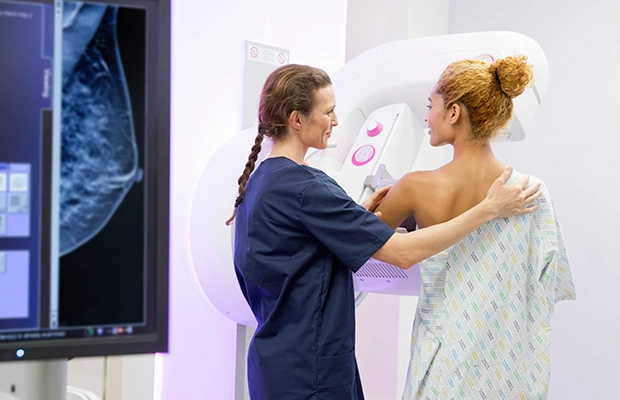
Jackson Health System offers comprehensive breast imaging services, including advanced 3D mammography, at Jackson Memorial Hospital and Jackson North Medical Center.
If you’ve heard about 3D mammography and wondered what makes it different from a regular mammogram, you’re not alone. This newer technology, also called tomosynthesis, is changing how doctors detect breast cancer early.
What Is 3D Mammography?
A traditional mammogram takes two X-ray images of each breast—one from the top and one from the side. Standard mammography, also known as full field digital mammography, is the baseline two-dimensional imaging method for breast cancer screening. While this has been the standard for decades, it has some limitations, such as difficulty detecting abnormalities in dense breast tissue, which 3D mammography aims to overcome.
3D mammography uses the same compression as a regular mammogram, but instead of taking just two images, the machine takes many images from different angles using a specialized X-ray machine. Think of it like slices of bread – each slice gives doctors a clearer view of your breast tissue, layer by layer.
How Does It Work?
During the exam, the breast is compressed, which helps obtain high-quality images. The X-ray arm sweeps in a gentle arc across your breast, capturing several images from different positions. This happens in just a matter of seconds. Those images are then processed by a computer, creating a layered, three-dimensional view that gives your radiologist much greater detail.
The entire exam usually takes approximately 10 to 15 minutes, similar to a traditional mammogram.
Why 3D Mammography Matters for Breast Cancer Screening
3D mammography technology helps radiologists see breast tissue in greater detail. The detailed imaging helps them detect cancer at early stages and find cancers that might be difficult to detect on a regular mammogram.
“The most important thing is to always have a tomosynthesis mammogram available for patients, which uses advanced 3D imaging technology,” said Danielle Fitzgerald, director of radiology services at Jackson North Medical Center. “With this technology, we can rule out many things and be more specific, distinguishing abnormal tissue from normal breast tissue.”
Research shows that 3D mammography:
- Finds 20 to 65 percent more invasive breast cancers compared to traditional mammograms
- Reduces callbacks for additional testing by approximately 15 percent
- Works especially well for women with dense breast tissue
- Helps find breast cancer early, leading to earlier and more accurate diagnosis while reducing false-positive rates
What to Expect During Your Appointment
The experience of a 3D mammogram is similar to a regular mammogram.
Step one: You’ll remove your top and any jewelry above the waist.
Step two: A technologist will position your breast between two plates.
Step three: The breast is compressed using a paddle—a necessary part of the process—to flatten the breast tissue, which helps obtain clear images and reduces radiation exposure.
Step four: The X-ray arm moves in an arc while taking images.
Step five: The first four steps are then repeated for each breast.
You might feel some pressure or discomfort during breast compression, but it only lasts a few seconds for each image.
For greater comfort, consider scheduling your mammogram after your menstrual period, when breast tenderness is usually reduced.
Is There More Radiation?
3D mammography does use slightly more radiation than a traditional 2D mammogram. However, the amount of radiation exposure is still low and considered safe. The U.S. Food and Drug Administration approved 3D mammography in 2011, and it’s now widely available.
Newer technology can create 2D images from the 3D data, which means the total radiation dose is only slightly higher than a regular mammogram.
Who Should Get a 3D Mammogram?
Most women who qualify for a regular mammogram can benefit from 3D mammography. It’s especially helpful if you:
- Have dense breast tissue
- Have a family history of breast cancer
- Want the most accurate screening available
Radiologists often compare images of one breast to the other to improve detection accuracy and interpret findings more clearly.
Your doctor can help you decide when to start getting mammograms based on your age and risk factors. Most women should begin annual mammograms at age 40.
Dense Breasts and 3D Mammography
If you’ve ever been told you have dense breasts after a mammogram, you’re not alone—about half of all women have dense breast tissue. Dense breasts simply mean there is more fibrous and glandular tissue compared to fatty tissue. While this is completely normal, it can make breast cancer screening more challenging. That’s because dense breast tissue and breast abnormalities both appear white on a mammogram, making it harder to spot early signs of cancer.
This is where 3D mammography makes a real difference. Unlike traditional mammograms that take just two X-ray images, 3D mammography captures multiple images from different angles. These images are then combined to create a detailed, three-dimensional view of your breast tissue. By looking at each “slice” individually, radiologists can see through overlapping tissue and spot cancers that might otherwise be hidden.
For women with dense breasts, this advanced breast imaging technology can significantly improve breast cancer detection. Not only does this mean more cancers are found at an earlier, more treatable stage, but it also reduces the number of false positive results, so fewer women are called back for unnecessary tests or biopsies.
If you have dense breast tissue, it’s important to talk with your healthcare provider about your breast density and what it means for your breast health. Your provider can help you decide if additional screening tools, such as ultrasound or MRI, might be the best option for you, alongside 3D mammography. Together with your doctor, you can create a personalized breast cancer screening plan that gives you the best chance to detect breast cancer early.
Remember, breast density is just one factor in your overall risk for breast cancer. Maintaining a healthy lifestyle, being aware of your personal and family history, and keeping up with regular screening mammograms are all important steps in protecting your breast health.
Does Insurance Cover It?
Many insurance plans now cover 3D mammography, but coverage can vary. Check with your insurance provider to understand your benefits and any out-of-pocket costs.
3D Mammography at Jackson Health System
At Jackson Health System, all breast imaging uses this advanced technology, giving you the best chance of early detection.
Screening mammography is recommended for women at average risk of breast cancer, and this advanced technology is used for all routine screenings. Women with a personal history of breast cancer or other risk factors may require a different screening approach tailored to their needs.
Want to Learn More?
Hear directly from Danielle Fitzgerald, director of radiology services at Jackson North Medical Center, as she discusses breast health for everyone—including men—on Jackson’s podcast, “On Call, Off Script.”
Watch the episode: More Than a Woman’s Issue: Breast Health for Everyone
Listen to the podcast: On Call, Off Script: A Jackson Health System Podcast
Taking the Next Step
Early detection saves lives. When breast cancer is found early, it’s nearly 100 percent treatable, often with fewer and less intensive treatments.
3D mammography is just one way Jackson Health System is working to give you the most advanced care possible. Combined with self-exams and regular checkups, it’s a powerful tool in protecting your breast health.
Have questions about breast health or mammograms?
Our breast imaging specialists are here to help. Call to speak with someone who can answer your questions and help you schedule your appointment.
To learn more about breast health services at Jackson Health System, visit: Breast Health Services in Miami, Mammogram, Breast Cancer Treatment